Clearing an input field in Puppeteer
Tensor & Flow: TensorFlow & Machine Learning on Android
A Journey Towards Android App Log Subscriptions
A Factoid: The Enforcing-Inheritance-Generic-Thing-in-Kotlin
I learn a Kotlin thing everyday. Today’s thing, “Enforcing-Inheritance-Generic-Thing-in-Kotlin” (I’m terrible with names and terms, there’s an official term for this that I cannot remember). I have a function that starts an activity for a result. I want to limit this function to only be able to start activities extending an abstract class, FooActivity. In Java:
private void start(Activity activity, Class<? extends FooActivity> cls) {
   // some stuff with intents
}
In Kotlin:
Diving into Android Things
Exploring ExoPlayer
Diversity (Lacking) in Tech
Twitter, following in the same steps of Google, Facebook, Yahoo, and other big technology companies, published statistics regarding the diversity of their workforce.
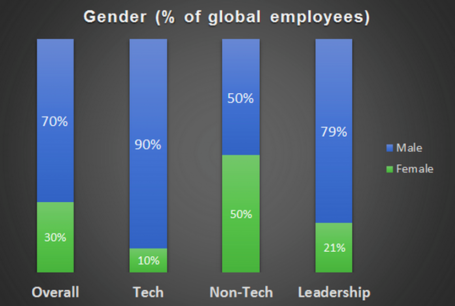
As I would have guessed (and have observed in real life), most tech companies are (disproportionately, relative to the ethnic makeup of the United States) comprised of White males, especially in technical fields. Across the board (at Google, Twitter, Facebook, and Yahoo), only 1-2% of technical roles are filled by Black workers. One would think that under ideal circumstances, the workforce makeup would somewhat resemble the ethnic makeup of the United States. There is obviously a gap somewhere, whether it be societal barriers, education, achievement gaps, cultural issues, racism, access to resources, etc. I’m curious, for my Black brothers and sisters in tech that I have met (I do know quite a few), how do they differ, what did they do differently, how was their upbringing different that provided them the opportunity to work in technology, what decisions did they make, what barriers were or were not in their way? For myself, my path to a software engineering career resembled:
